
![[M↓]](../../images/markdown.transparent.png) Markdown, makefile
Markdown, makefile Effective SSNe from fo,F2 Measurements,
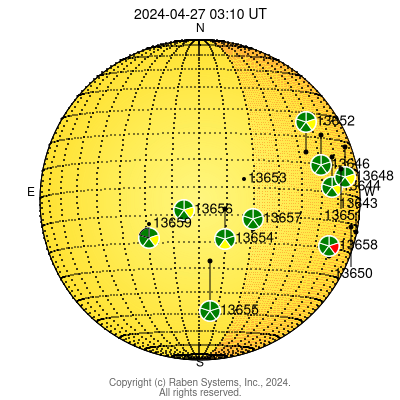 Solar Active Regions Earth- and Far-Side
 Strength & ETA of Far-Side Active Regions
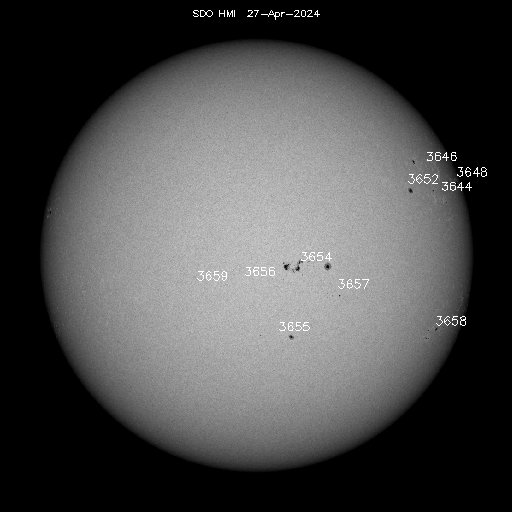 Sunspots Increase Ionisation & Trigger X-Ray Flares
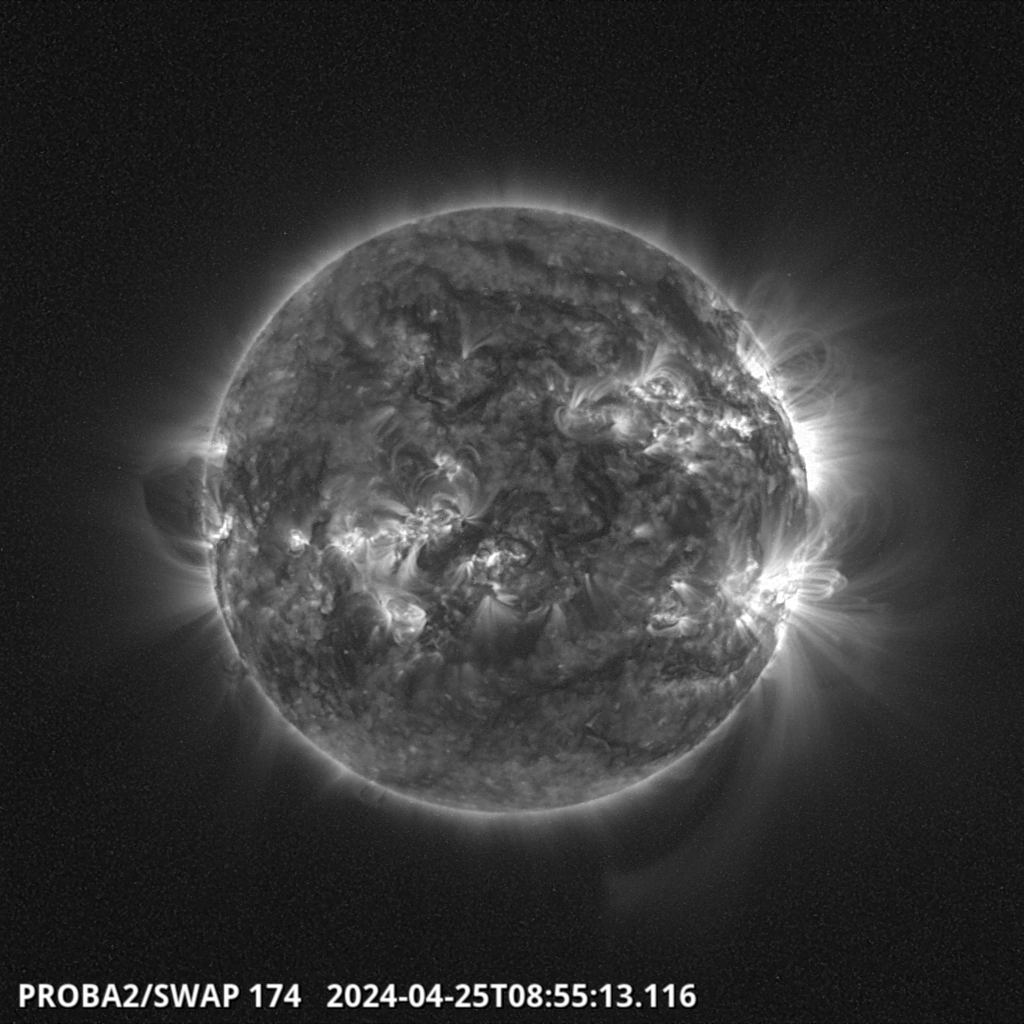 Magnetic Classification of Sunspots at 17.4 nm
 Solar Terrestrial Activity Report
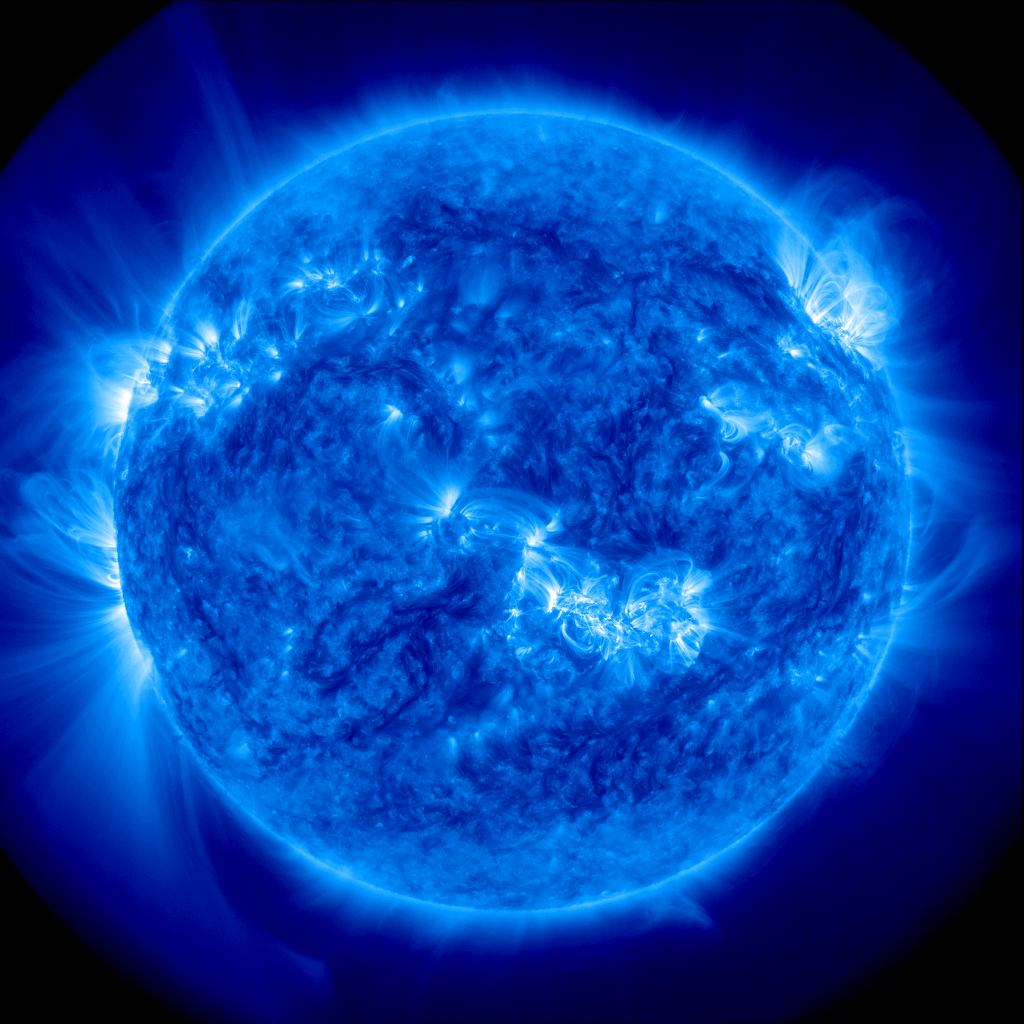 Real-Time
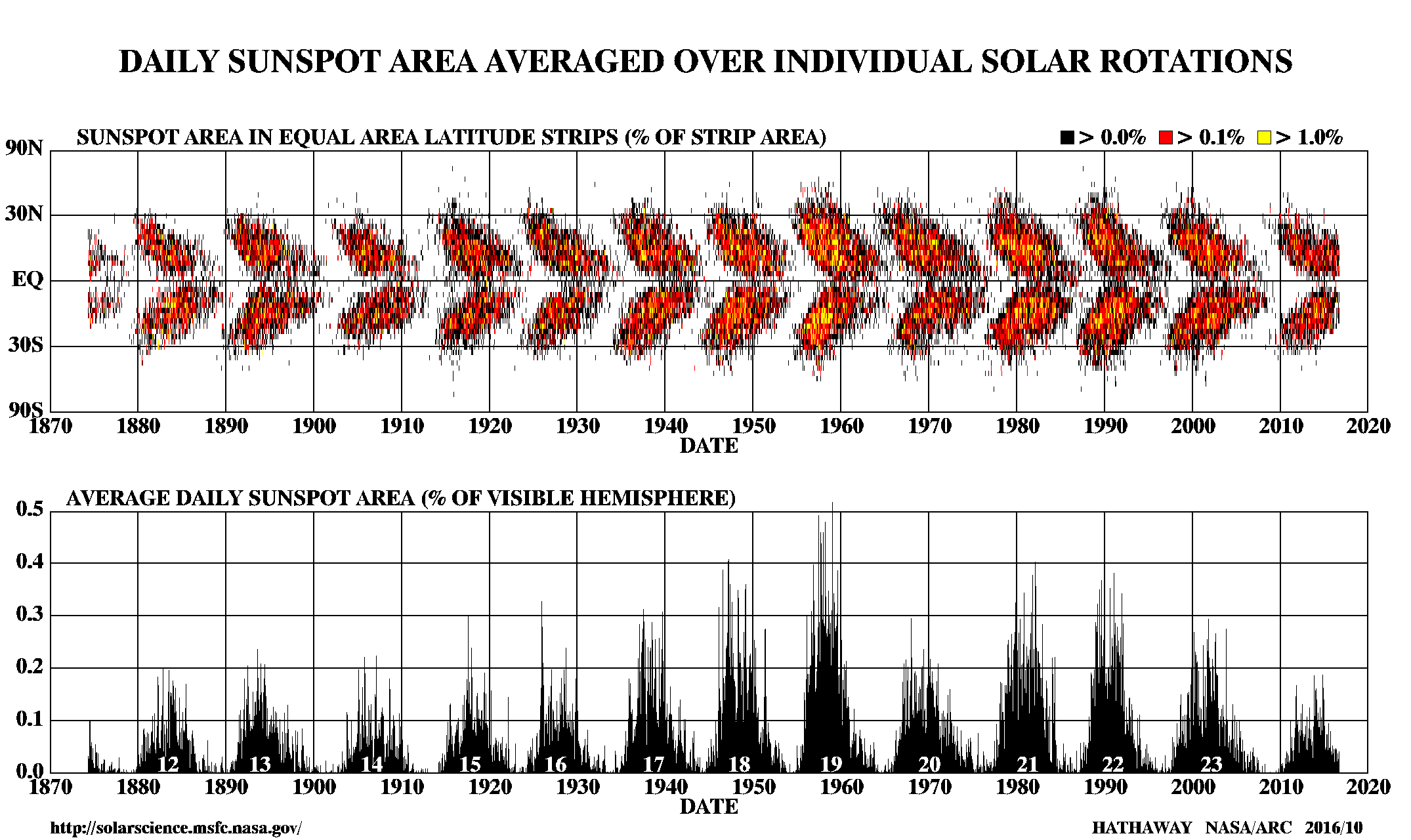 Sunspot Butterfly Diagram
 EISN Estimated International Sunspot Number
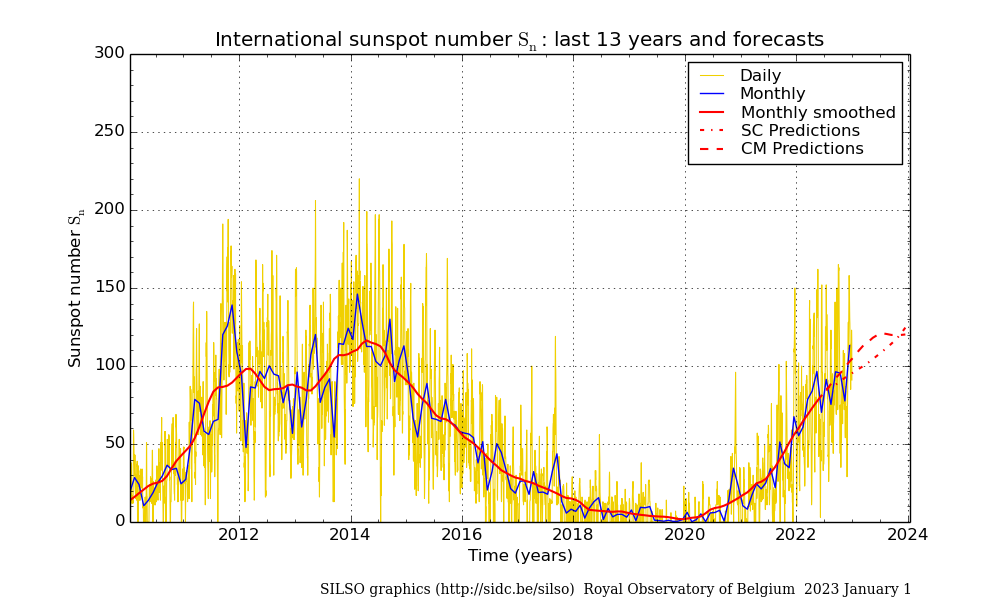 Sunspot Number History &
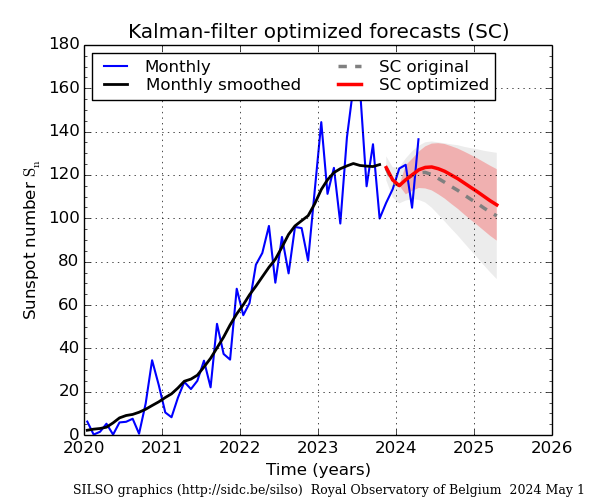 Cycle Progression and ISES «Consensus» Forecast
 10.7 cm Radio Flux Proxy of Ionisation
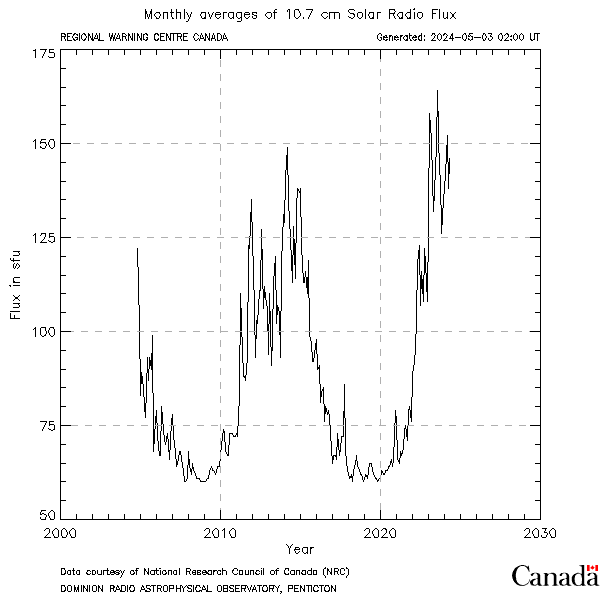 10.7 cm Radio Flux Progression
 10.7 cm Radio Flux 27-Day Outlook10.7 cm Radio Flux USAF 45-Day ForecastSunspot &
 HF Propagation Overview
TODO
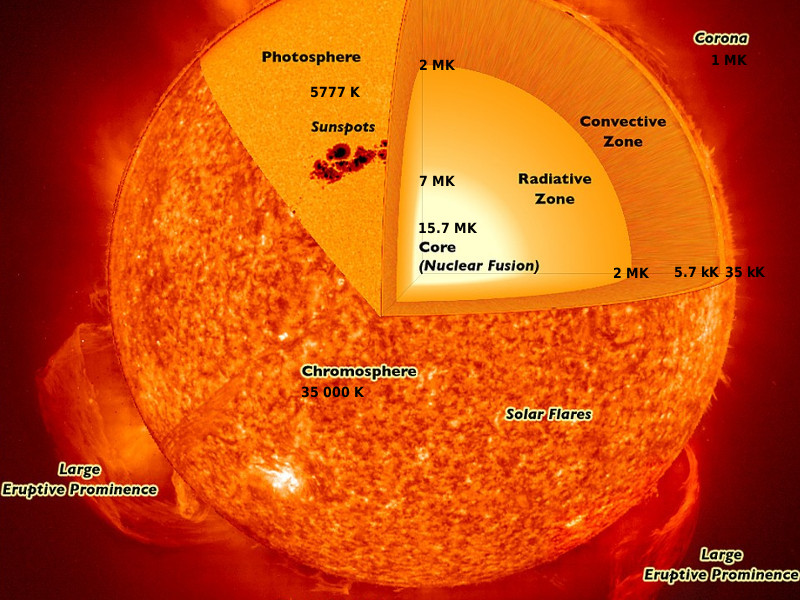
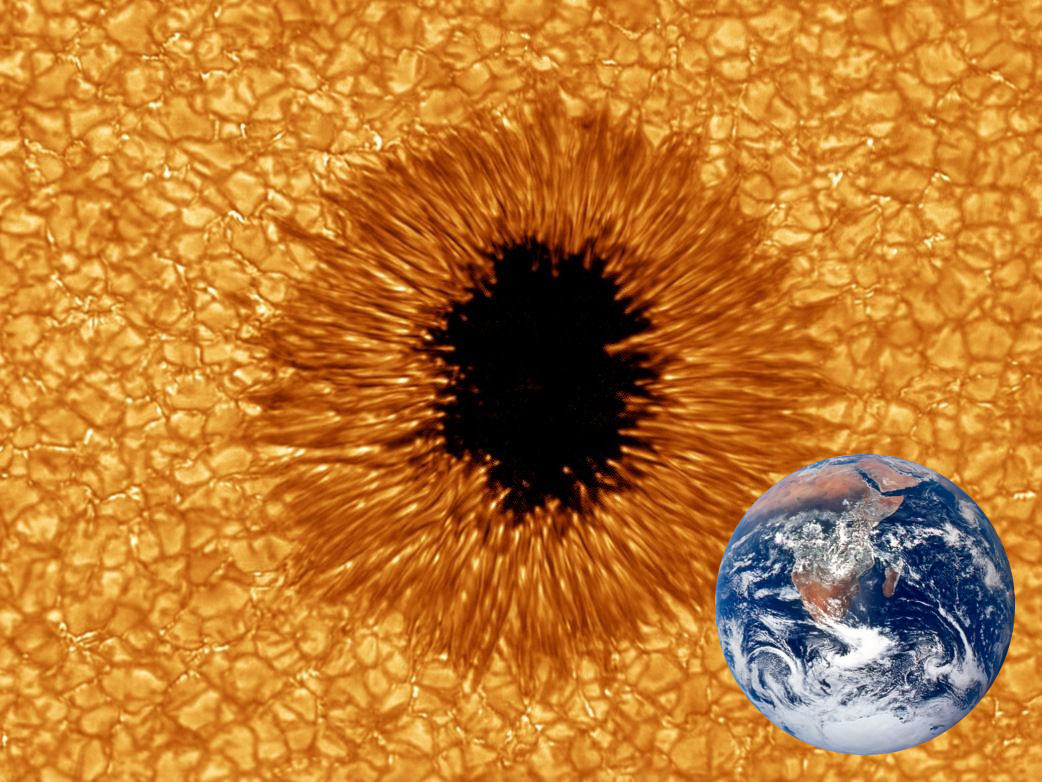
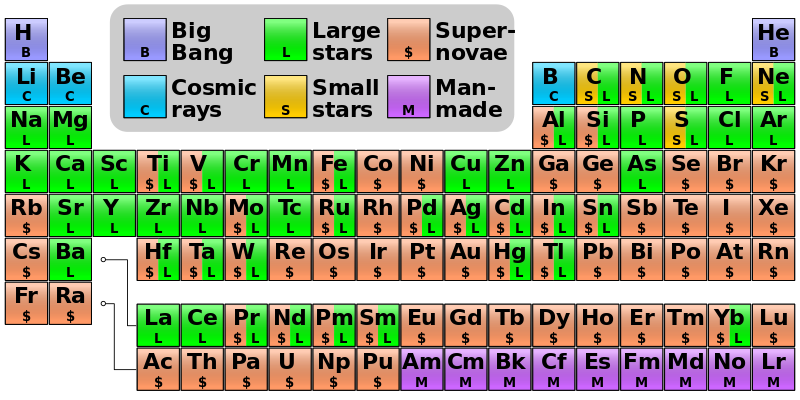
Localised heliomagnetic field concentrations push away the Sun’s convection cells, revealing spots of the cooler photosphere below, called sunspots. Traces of iron in our Sun, produced by a previously exploded star, are concentrated in the strong magnetic fields of sunspots. Iron (Fe) plasma, more than anything else on the Sun, is what emits extreme UV radiation. Eight minutes later, this extreme UV radiation hits Earth’s ionosphere, significantly enhancing its ionisation.
Extreme UV from the Sun gets fully absorbed by Earth’s atmosphere. This and the fact that extreme UV mirrors are hard to build, render direct measurements of extreme UV flux impossible. Instead, proxies of extreme UV radiation are used, such as sunspot numbers and the 10.7 cm radio flux.


 server‑side script.
and
server‑side script.
and
 to make it run as secure JavaScript in the browser.


