


![[M↓]](../../images/markdown.transparent.png) Markdown
MarkdownFixing USB Autosuspend
Serge Y. Stroobandt
Copyright 2015–2017, licensed under Creative Commons BY-NC-SA
- Home
- Information Technology
- Desktop Systems
- USB Autosuspend
Problem
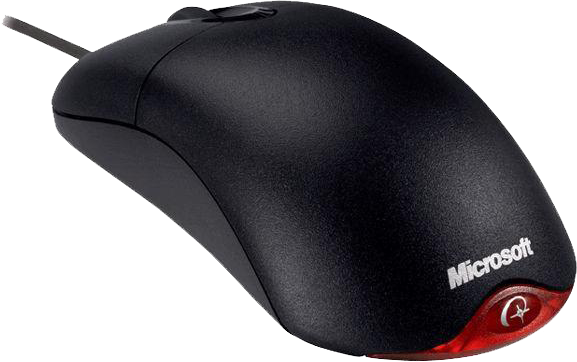
- The Linux kernel automatically suspends USB devices when there is driver support and the devices are not in use.1 This saves quite a bit of power. However, some USB devices are not compatible with USB autosuspend and will misbehave at some point. Affected devices are most commonly USB mice and keyboards.2 Personally, I had only one Microsoft™ Wheel Mouse Optical affected, despite owning other models of the same brand.
In essence, this is not really a USB hardware problem, but perhaps more a Linux problem. The actual fault lies with a misinterpretation of the eXtensible Host Controller Interface (xHCI) specification. This issue previously did not exist with the older Enhanced Host Controller Interface (EHCI) specification. A «Sharp» explanation is available online.3
The Linux kernel patch for this problem will probably one day automatically trickle in downstream and onto my affected Xubuntu LTS 14.04 system. Nonetheless, with a crashing computer mouse at hand, things cannot wait. However, patching my current 3.13.0-35-generic x86_64 kernel is out of the question! We will rather grab this opportunity to learn a bit about writing rules for udev, the device manager for the Linux kernel. I am writing “for the Linux kernel”, because udev executes entirely in user space.
Identify the device
First, one needs to properly identify the affected USB device by its vendor and product ID. Run the following command and look for the device description.
$ sudo lsusb -vWe take note of the Bus and Device numbers —yours will be different!— as well as the idProduct and idVendor hex numbers.
...
Bus 008 Device 002: ID 045e:0040 Microsoft Corp. Wheel Mouse Optical
Device Descriptor:
  bLength                18
  bDescriptorType         1
  bcdUSB               1.10
  bDeviceClass            0 (Defined at Interface control)
  bDeviceSubClass         0
  bDeviceProtocol         0
  bMaxPacketSize0         8
  idVendor           0x045e Microsoft Corp.
  idProduct          0x0040 Wheel Mouse Optical
  bcdDevice            3.00
  iManufacturer           1 Microsoft
  iProduct                3 Microsoft 3-Button Mouse with IntelliEye(TM)
  iSerial                 0
  bNumConfigurations      1
...
Test
If the affected system is a laptop computer, first eliminate laptop-mode-tools, powertop and similar tools as a possible cause of the problem. Since my affected system is a desktop, I assured myself that these tools are not installed.
Once that is cleared off, a simple test suffices to know whether the suspect USB device is really affected by autosuspend. Beware, kernel device numbering is different from lsusb. In the /sys/bus/usb/devices/usb8/ subdirectory, device numbering starts with 8-0. Hence, the second device listed by lsusb is here actually called 8-1. In case of doubt, check the values of idVendor and idProduct.
$ cat /sys/bus/usb/devices/usb8/8-1/idVendor
045e

$ cat /sys/bus/usb/devices/usb8/8-1/idProduct
0040
If the device driver supports it, the USB power/control attribute will default to auto. There may also be a file named level. As of the 2.6.35 kernel, this file is depreciated and now replaced by control.1
$ cat /sys/bus/usb/devices/usb8/8-1/power/control
auto
The auto state is the normal state in which the kernel is allowed to autosuspend and autoresume the device. In kernels up to 2.6.32, one could also specify suspend, meaning that the device should remain suspended and autoresume was not allowed. This setting is no longer supported.1
In a command terminal, enter now the following command:
$ echo 'on' |sudo tee /sys/bus/usb/devices/usb8/8-1/power/controlThe on state means device autosuspend is not allowed. Of course, system suspends are still allowed. If, without rebooting, your device now works flawlessly, USB autosuspend is the problem at hand. However, above command only works temporarily. More needs to be done to solve the problem indefinitely.
Permanent solution
A permanent solution can only be achieved by creating a device-specific rules file for udev, the device manager for the Linux kernel:
$ sudo $EDITOR /etc/udev/rules.d/usb-power.rulesPlease, note: While lsusb reports the hex vendor and product id with a 0x prefix, the syntax for udev rules does not allow the leading 0x, even though the id numbers are still specified in hex.4 My usb-power.rules file contains only one comment line and one line of code:
# Microsoft Corp. Wheel Mouse Optical
ACTION=="add", SUBSYSTEM=="usb", ATTR{idVendor}=="045e", ATTR{idProduct}=="0040", TEST=="power/control", ATTR{power/control}="on"
Reboot & check
Finally, reboot your machine and check whether the pertaining power/control attribute remained set to on.
$ cat /sys/bus/usb/devices/usb8/8-1/power/control
on
References

This work is licensed under a Creative Commons Attribution‑NonCommercial‑ShareAlike 4.0 International License.
Other licensing available on request.

Unless otherwise stated, all originally authored software on this site is licensed under the terms of GNU GPL version 3.

This static web site has no backend database.
Hence, no personal data is collected and GDPR compliance is met.
Moreover, this domain does not set any first party cookies.
All Google ads shown on this web site are, irrespective of your location,
restricted in data processing to meet compliance with the CCPA and GDPR.
However, Google AdSense may set third party cookies for traffic analysis and
use JavaScript to obtain a unique set of browser data.
Your browser can be configured to block third party cookies.
Furthermore, installing an ad blocker like EFF's Privacy Badger
will block the JavaScript of ads.
Google's ad policies can be found here.

 server‑side script.
and
server‑side script.
and
transcoded by
 to make it run as secure JavaScript in the browser.


 references


 .
.

